
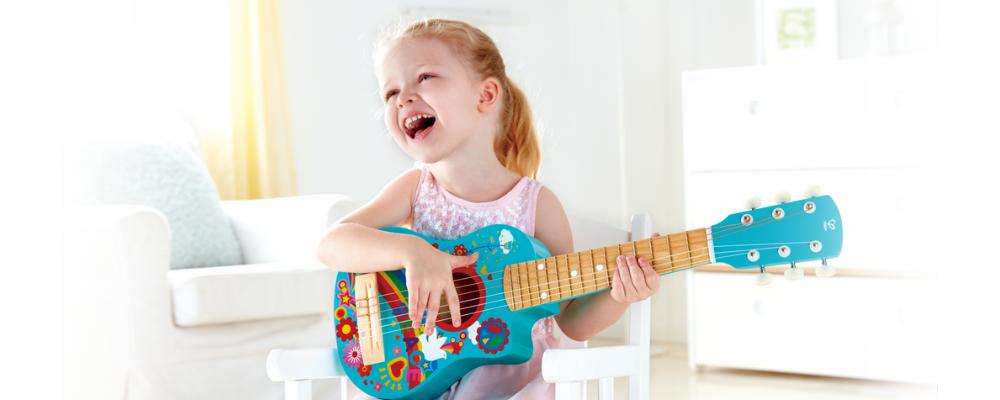
Little Musicians Grow Big: How Musical Instruments Become the "Magic Key" to Children's Development🎵
As parents, we always want to give our children the best possible development. Beyond academic learning, developing diverse abilities is crucial.Music and ArtNot only does it bring aesthetic vision and sensory enjoyment, but the musical instrument itself is also a "magic key" to unlock children's potential.
Let’s talk today about what unexpected growth surprises can be brought about by letting children get in touch with musical instruments.
How musical instruments activate sensory "whole brain development"
The process of children learning a musical instrument is an exciting journey of sensory integration, enhancing auditory skills, tactile sensitivity, training small muscles, increasing lung capacity, and strengthening focus and emotional stability.
A great leap forward in tactile sensitivity
Little hands playing piano keys, toggleUkulele guitar stringsTo hold a drumstick or pull a violin bow, the fingertips must precisely sense the force, position, and vibration. This practice of fine motor skills directly stimulates the development of the brain's tactile area, making small hands more dexterous and sensitive.
existDrummingWhen waving the arms and fingers,Playing the harmonicaThe flow of air when playing the flute or the coordination of the body when playing the cello allow children to feel more clearly the existence and movements of their own bodies.
Auditory radar fully upgraded
When practicing an instrument, children must listen carefully to each note they play—Is the pitch correct? Is the rhythm steady? Is the tone beautiful?
This process greatly exercises auditory concentration, auditory acuity and discrimination.
When learning to play in an ensemble, it is even more important to listen carefully to the sounds of other instruments, to determine when to enter and when to blend softly. This greatly enhances the overall perception and analytical ability of the sound environment.
Piano, jazz drums,Some percussion instrumentsIt requires the coordination of both hands (and sometimes even both feet) to perform different rhythms and intensities of physical movements. This promotes communication and collaboration between the left and right hemispheres of the brain, making the neural networks tighter. The body constructs a little conductor: stabilizing the beat and mastering the changes in rhythm requires high concentration and precise coordination of various body parts. This internalized sense of rhythm and improvisation is the foundation for physical coordination, athletic performance, and even the sense of language rhythm.
Music is a carrier of emotions. Children learn to express their inner joy, sadness, excitement, or tranquility through the speed of sound, the strength of intensity, and the variation of timbre. What a precious channel for emotional expression and release!
🎵 Has your child started learning a musical instrument? Come to Eurekakids to find the perfect musical instrument and toy for them!🎵